
 English
 中文简体
中文简体 Español
The role of a Plastic Water Bottle For Adults is changing as people carry water through longer commutes, office hours, workouts, travel, and outdoor activities. A bottle that once served mainly as a simple container is now being designed around capacity, portability, drinking methods, cleaning, and repeated daily use. This shift is also influencing how manufacturers approach reusable water bottles, particularly when products need to balance practical handling with different adult lifestyles.
Adult Users Need More Than One Bottle Format
Adults use water bottles in a wide range of environments. An office worker may prefer a compact bottle that fits into a desk drawer or backpack, while someone exercising may need a larger capacity and a lid that can be opened quickly. Travelers can have different requirements again, particularly when storage space and weight become important.
This diversity means a Plastic Water Bottle For Adults does not have one universal shape. Capacity, bottle diameter, lid construction, and grip area can all be adjusted according to the intended application. A narrow body may make the bottle easier to place in a bag's side pocket, while a wider structure can provide greater capacity without increasing overall height too much.
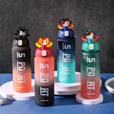
For manufacturers, these differences make reusable water bottles a product category with considerable room for variation rather than a single standardized item.
Capacity Influences Everyday Use
Capacity is one of the most visible differences between adult bottle designs, but it also affects portability. A larger bottle can reduce the need for frequent refilling, while a smaller model may be easier to carry throughout a working day.
When developing a Plastic Water Bottle For Adults, manufacturers therefore need to consider the relationship between capacity and physical dimensions. Increasing volume by simply making the bottle wider may make it less convenient to hold or store. Increasing height can create similar issues with backpacks, cup holders, and other storage spaces.
This is why portable water bottle design often involves compromises between volume, shape, and weight. The final dimensions need to correspond with the environment in which the bottle is expected to be used.
The Lid Has Become Part of the User Experience
The bottle body is only one part of the design. Different users may prefer screw caps, flip-top lids, sports-style openings, or wide-mouth structures depending on how they drink and clean the bottle.
For a Plastic Water Bottle For Adults, the lid also affects leakage prevention, drinking speed, and ease of cleaning. A bottle intended for exercise may emphasize quick access, while one used primarily in an office environment may prioritize a secure closure that can remain inside a bag.
Manufacturers also need to consider how the cap connects with the bottle neck. Thread design, sealing components, and repeated opening and closing can influence the overall user experience.
Material Selection Shapes the Bottle
Plastic remains widely used for reusable bottles because different plastic materials can provide different combinations of weight, transparency, impact resistance, and processing characteristics.
For a Plastic Water Bottle For Adults, material selection needs to correspond with the intended application rather than simply reducing production weight. A bottle designed for frequent carrying may require a different structural balance from one intended mainly for indoor use.
The material also affects manufacturing methods. Injection molding, blow molding, and other processes can be used for different components and bottle structures, while wall thickness and shape need to be considered during mold development.
This relationship between plastic bottle manufacturing and product design means that appearance cannot be separated entirely from production requirements.
Cleaning Becomes a Design Consideration
Reusable bottles are handled repeatedly, so cleaning is an important part of their everyday use. Narrow openings can make some bottle interiors more difficult to access, while complex lid structures may contain areas that require additional attention.
A Plastic Water Bottle For Adults designed for repeated use can therefore benefit from considering cleaning access during the early design stage. Wide-mouth openings, detachable components, and simpler internal structures can change how users maintain the bottle.
For manufacturers, this also creates opportunities to differentiate products without relying only on color or graphics. Small changes in opening diameter, cap structure, or component arrangement can influence how practical the bottle feels during long-term use.
Customization Extends Beyond Appearance
B2B buyers may require bottles with different capacities, colors, surface finishes, logos, lid structures, or packaging formats. However, customization can also involve changes to dimensions and components based on the intended market.
A Plastic Water Bottle For Adults intended for corporate use may prioritize branding space and compact dimensions, while a sports-oriented product may emphasize grip and drinking convenience. Travel products can place greater importance on portability and closure security.
This makes reusable water bottles suitable for multiple commercial applications, but it also means manufacturers need to define the intended usage scenario before finalizing the product structure.
The development of the Plastic Water Bottle For Adults is therefore moving toward more application-specific design. Capacity, portability, materials, lids, cleaning access, and customization all influence how the bottle fits into daily routines. Rather than treating a bottle as a simple container, manufacturers are increasingly designing around the different ways adults actually carry, use, clean, and store their drinking products.
