
 English
 中文简体
中文简体 Español
A Gradient Color Bottle presents a different production challenge from a conventional single-color sports bottle. Instead of matching one fixed shade, manufacturers need to control how two or more colors transition across the bottle surface. The final appearance can also change with the bottle's shape, surface condition, and viewing angle, making color control an important part of sample approval and batch production.
The Gradient Becomes Part of the Design
A solid-color bottle has a relatively simple visual reference. A gradient design depends on the relationship between several shades and the position where they begin to change. On a Gradient Color Bottle, the transition may extend across a large section of the body, making the color effect part of the product's overall identity.
The physical bottle surface also matters. Sports bottles normally have curved shoulders, side walls, and lower sections. These areas reflect light differently, so the same color transition may appear stronger or softer depending on where it is viewed.
This is why a digital rendering cannot always serve as the only production reference. A physical sample gives both the buyer and manufacturer a more practical way to assess the actual color effect before larger production begins.
Bottle Geometry Can Change The Visual Effect
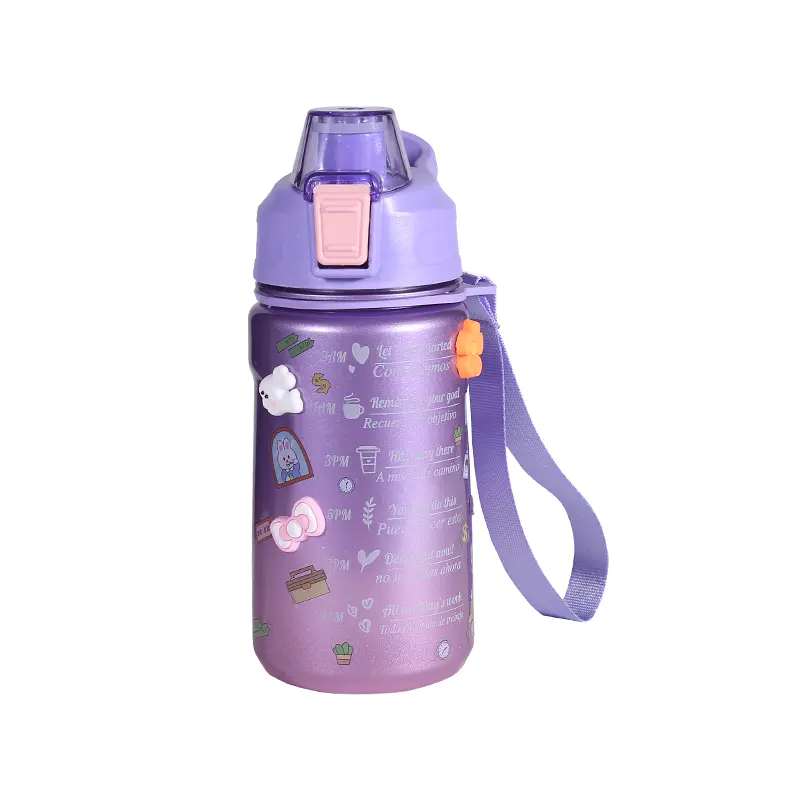
The relationship between bottle dimensions and color placement becomes more noticeable when the design is applied to a large-capacity bottle. Kaixuan's listed gradient sports bottle has a 1500ml capacity, a PC body, a flip-top lid, and a carrying strap. The relatively large body provides a broad surface for the gradient treatment.
For a Gradient Color Bottle, changing the height or diameter can therefore affect how the transition is perceived. A gradient positioned correctly on one bottle proportion may look too high, too low, or visually compressed after the body dimensions are changed.
The same consideration applies when buyers develop several sizes from one design. Artwork and color placement may need to be adjusted according to the actual bottle geometry rather than simply scaled together.
Color References Need To Match Production
Color approval is more useful when the production reference clearly defines the intended appearance. Buyers may provide digital artwork, color codes, physical samples, or several of these references together.
For a Gradient Color Bottle, the reference should describe more than the two colors involved. The transition direction, approximate position, and visual intensity can all affect the finished result.
|
Color Detail |
Production Consideration |
|
Starting color |
Match the approved shade |
|
Ending color |
Maintain the intended depth |
|
Transition position |
Keep the change in the specified area |
|
Curved surface |
Check appearance from different angles |
|
Large body |
Watch for uneven color distribution |
|
Production batches |
Compare against the approved sample |
Once the sample is approved, it can provide a practical reference for subsequent production. This becomes especially useful when several color combinations are produced from the same bottle structure.
Large Surfaces Make Differences More Visible
The size of the bottle can influence how easily color differences are noticed. A small bottle has a limited visible area, while a larger sports bottle presents a much broader surface for inspection.
On the Gradient Color Bottle supplied by Kaixuan, the gradient occupies a significant part of the body. Differences in color distribution, surface marks, or transition quality can therefore become more noticeable when multiple finished bottles are viewed together.
The company's product information identifies this model as a PC sports water bottle with a 1500ml capacity and flip-top structure. Its product range also supports different specifications and customized requirements for sports water bottles.
Sampling Connects Design With Production
For manufacturers, sampling is the point where the intended color design can be compared with the actual molded bottle. A Gradient Color Bottle sample can be checked for color transition, surface appearance, proportions, and coordination between the body and closure.
Kaixuan provides OEM and ODM production for sports water bottles and states that specifications and functions can be customized according to customer requirements. This type of production process gives buyers a way to establish an approved reference before moving into volume manufacturing.
Inspection of a Gradient Color Bottle also needs to consider the relationship between colors rather than checking only one shade. The transition itself is part of the finished design, so noticeable differences in position, intensity, or distribution can affect the appearance of the complete batch.
For buyers developing gradient drinkware, color selection, bottle proportions, sample approval, and production inspection are closely connected. The manufacturing challenge is not simply applying two colors to a plastic bottle, but reproducing the intended visual transition consistently on the finished product.
