
 English
 中文简体
中文简体 Español
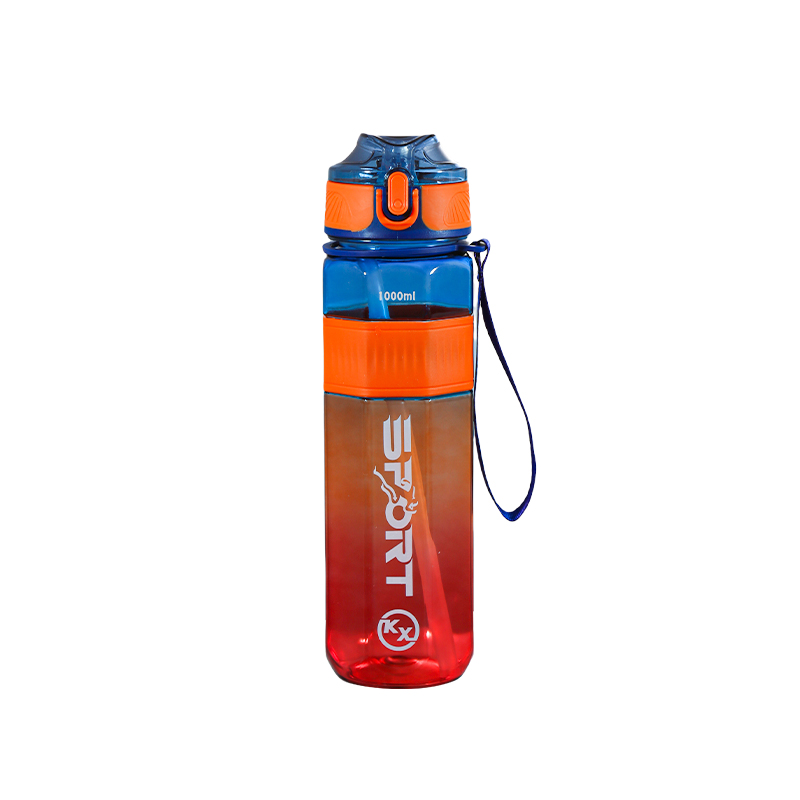
Manufacturing a plastic flip top water bottle looks straightforward from the outside — mold the body, mold the lid, assemble — but the flip mechanism itself is where most production complexity and field-failure risk actually concentrates, particularly for bottles marketed toward school and kids' retail channels where the lid gets operated dozens of times daily.
Spring Tension in the Bounce Mechanism Requires Precision Molding
The one-click bounce action on a flip-top lid depends on a small internal spring or flexible hinge component holding consistent tension across thousands of open-close cycles. A plastic flip top water bottle molded with inconsistent hinge wall thickness develops weakened bounce action faster than a unit produced with tighter dimensional tolerance at the hinge point, and this weakening typically shows up as customer complaints about a lid that no longer "pops" open reliably after a few months of daily use. Buyers should request cycle-testing data on the bounce mechanism specifically, since a factory's general durability claims for the bottle body do not necessarily reflect hinge-specific testing.
PC Material Grade Affects Both Impact Resistance and Hinge Longevity
Polycarbonate (PC) is the standard material for flip-top kids' bottles because of its impact resistance, but PC grade varies in how well it tolerates the repeated flexing that occurs at the hinge point specifically, as opposed to the rigid body sections that only need to resist drops. A PC material water bottle built with hinge-grade resin at the flex point — rather than the same standard-impact PC used throughout the rest of the body — holds up to repeated flexing better, and factories that specify different resin grades for the body versus the hinge component typically report fewer hinge-cracking complaints over the product's service life.
|
Component |
Standard PC Grade |
Hinge-Optimized PC Grade |
|
Impact resistance |
High |
High |
|
Repeated flex tolerance |
Moderate, cracks over time |
Higher, resists fatigue cracking |
|
Best-fit use |
Rigid body sections |
Hinge and flip-cover mechanism |
|
Typical failure mode if mismatched |
Hinge fatigue after months of use |
Rare with matched material |
Full Color Printing Requires Surface Prep Matched to PC Substrate
Full-color bottle printing on a PC surface needs a printing process calibrated to that specific substrate, since ink adhesion on polycarbonate behaves differently than on PP or PE bottle bodies. A factory running the same print process across different resin substrates without adjusting for substrate-specific adhesion risks color fading or peeling faster on PC bodies than on other materials, and buyers ordering full-color branded bottles for schools or promotional programs should confirm the printing process has been validated specifically against PC substrate rather than assumed to transfer directly from other bottle lines.
Detachable Assembly Design Affects Both Cleaning and Reassembly Reliability
A fully detachable plastic flip top water bottle design supports thorough cleaning, but it also introduces a reassembly step that young users need to complete correctly for the leak-proof seal to function. Manufacturers designing detachable components with an intentional, single-orientation fit — where parts can only reassemble correctly one way — reduce the chance of a child reassembling the bottle incorrectly and experiencing a leak that gets attributed to a product defect rather than a reassembly error. This design consideration matters specifically for bulk water bottles for students, where the end user assembling the bottle daily is typically a child rather than an adult familiar with the product.
Lanyard Attachment Points Need Load Testing Independent From the Lid
The lanyard attachment loop is often molded as part of the lid or cap assembly, which means its structural load capacity is tied to the same component handling the flip mechanism. Factories testing lanyard attachment strength separately from lid-flip cycle testing catch a failure mode that combined testing might miss: a loop that holds initial weight fine but weakens progressively as the lid assembly around it flexes through repeated use. Buyers sourcing bottles that will be carried by the lanyard loop regularly — a common use pattern in school settings — should ask whether attachment point testing is conducted independently or only as part of general drop testing.
